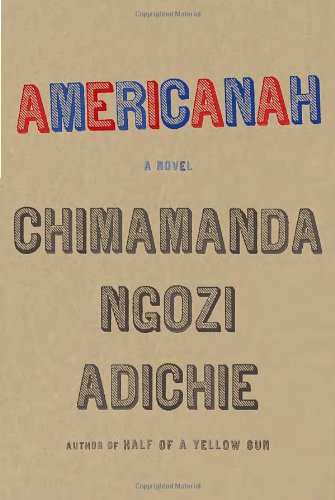
Welcome to the Cephalopod Coffeehouse, a cozy gathering of book lovers. Every month, we each post a review of the best book we've read that month. For December, I'm choosing Americanah, a novel by Nigerian-American writer Chimamanda Ngozi Adichie. And I'm not the only fan ... this book has been short-listed by just about every major reviewer as one of the best books of 2013. (That's how it came to my attention.) The praise is well-deserved. This is a delicious, warm, heartfelt, fascinating novel.
It was such a relief, after plowing through a few books I did not love, to read something I could just fall into. Although I have almost nothing in common with the protagonist, Ifemelu, I felt a kinship with her anyway ... Adichie is just that good a writer. From the braiding salons of Trenton, NJ (it takes *all day* to get hair into those complicated 'dos) to the streets of Lagos, you get to know Ifemelu and the people in her life. And you get to know a lot about black hair. When Ifem decides to go "natural," it causes an uproar among her Nigerian friends and family, who consider natural hair uncivilized and unfeminine.
From her Fresh Air interview (really worth listening to, even if you don't read the novel), I know Americanah is a highly autobiographical novel: Adichie took a similar journey from Nigeria to the US, for similar reasons, and now bounces back and forth between the countries. I learned that in Nigeria, unsurprisingly, nobody thinks of themselves as "black." They think of themselves by their ethnic identities: Ifemelu (like Adichie) is Igbo. Others in Nigeria are Yoruba, or Edo, or Hausa. There are hundreds of languages spoken in Nigeria, but Nigerians grow up speaking English as well. There's a telling anecdote in the book between Ifemelu's cousin Dike (pronounced "D.K."), who is being raised in America, and her Aunty Uju, Dike's mother: Ifemelu speaks Igbo to little Dike, and Aunty Uju tells her to knock it off, because it will confuse him to hear more than one language. Ifemelu considers pointing out that in Nigeria, all children speak at least two languages and are not confused, but decides it's pointless to make this argument to her aunt. Her aunt is an American now, and Americans believe in speaking one language only.
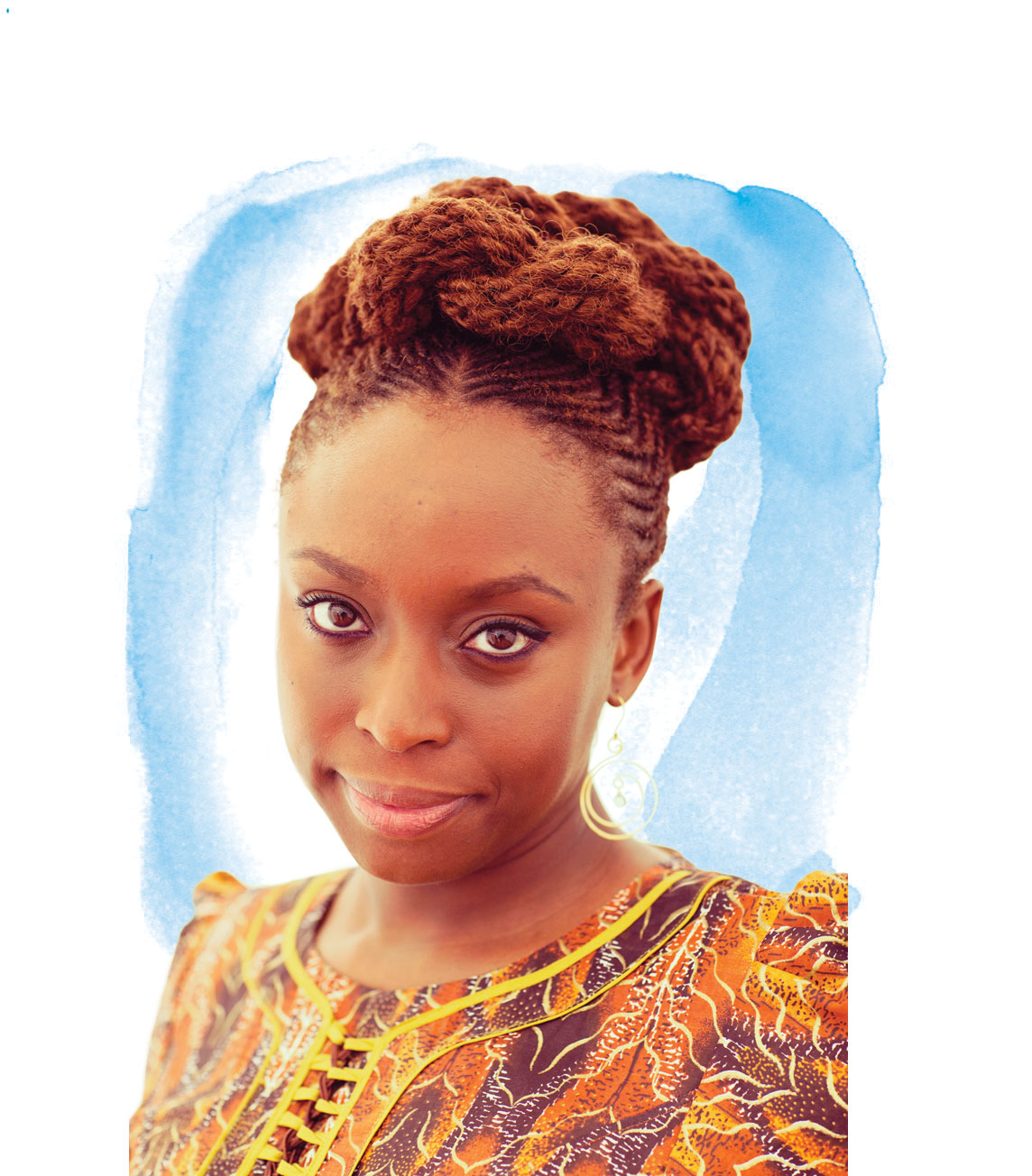 |
| Chimamanda Ngozi Adichie |
In America, Ifemelu learns what "being black" means. It means one thing when you're in a hair salon run by various African ex-pats; it means another thing when you're dating the rich hot white guy. It means yet another thing when you're dating the rigidly intellectual black professor. And another thing still when you're out of work and job-hunting. The hardest bit of the book for me was getting through Ifemelu's low point, what she let herself do when she was desperate and hungry.
Eventually, Ifemelu decides to go back to Lagos, a decision that seems just to happen to her. She is impetuous and occasionally thoughtless, which gives the book some of its tension. ("What crazy thing will Ifem do next?") At this point we end up where we started: back in Nigeria with the love story between the calm, solid Obinze and the wacky, spirited Ifemelu — now much more complex, as fifteen years have come between them. The love story is only the thinnest thread holding the book together, but it functions as a loose framework on which to hang all the commentary about race and class. If the book does occasionally stutter, it's when Adichie makes that common mistake of airing her own political views through Conversations Among Intellectuals at Dinner Parties; it seems all writers of literary fiction permit themselves this indulgence from time to time. I preferred the conversations in the beauty parlor between the international group of hairdressers and their (sometimes American) clients. The occasional blog posts that pepper the book are also interesting, but get a little preachy after a while.
In that Fresh Air interview, Adichie gently pokes fun at Americans for assuming all Africans are poor villagers living on a dollar a day; children with flies on their eyes, ribs poking out, dusty-skinned, just waiting for some kindly white American to rescue them. In reality, there's a relatively strong middle class in Nigeria. Adichie herself grew up middle class, and in Nigeria, middle class means you have servants. You have a housekeeper, a driver. When Ifemelu's dad loses his job and can't pay the rent, you realize her parents are living in a modest apartment; they don't even own a home, and yet they still have a staff. "Wealthy" means you have a lot more staff, plus a huge house. Men get wealthy through corruption, even our dear Obinze, who tries not to become too crooked. Women get wealthy by marrying such men or by becoming their mistresses.
All in all, this was a book I could really lose myself in. The characters are real and warm, the social commentary is eye-opening. The plot is pretty thin but that didn't bother me. It's a book about people and place, about class and race, about what "home" means ... and I loved it.
Edition note: The audiobook narration by Adjoa Andoh was both good and terrible. Andoh is a Brit of Ghanian descent, and her standard English is lovely and BBC inflected. The Nigerian English sounds accurate to me, but what do I know. But Andoh's American English is really awful. Every American sounds like Fran Drescher, and there are odd pronunciations, like "Merry-land" for "Maryland," which made me cringe. I was glad to have a paper copy to turn to during long talky passages.
Be sure to check out these other Coffeehouse reviews:
Edition note: The audiobook narration by Adjoa Andoh was both good and terrible. Andoh is a Brit of Ghanian descent, and her standard English is lovely and BBC inflected. The Nigerian English sounds accurate to me, but what do I know. But Andoh's American English is really awful. Every American sounds like Fran Drescher, and there are odd pronunciations, like "Merry-land" for "Maryland," which made me cringe. I was glad to have a paper copy to turn to during long talky passages.
Be sure to check out these other Coffeehouse reviews:

