We know by now that stories (especially novels, but also memoirs and other narrative-style writing) are one of the best ways to crack open a person's empathy. If there is one thing I see a desperate shortage of lately, especially in discussions of what happened in Ferguson, it's empathy. People are so quick to defend themselves, their tribe, and their privilege. That is a sure way to keep things exactly as they are now, and I don't know about the rest of you, but the way things are now seems pretty unacceptable to me. One of the gentlest, easiest ways to effect social change is to pick up a book. Immerse yourself in someone else's story for a while—get out of your own head, your own story, your own narrative. Hopefully, by the time you put the book down, you will have gained something precious: Compassion. A yearning for justice. A willingness to stop defending the status quo. If nothing else, just a little bit more understanding.
I am probably not the person who should be writing this, as I am not nearly as well-read as many of my peers on this subject. But I am here, I'm the one with this idea, so all I can do is list what I've read and tell you how it's affected me. Please, if you have other suggestions, share them.
• Black Boy, by Richard Wright. I read this because my daughter was assigned to read it for her high-school English class. This is Wright's autobiography of his younger years, when he was growing up in early 20th century Mississippi. Beautifully written and uncompromising, Wright starkly lays out the grim realities of life for a young man of color in the Jim Crow south. Before I read this book, I could not conceive of what life was like for people of color in that time, in that place.

• Beloved, by Toni Morrison. I wrote my senior thesis on this book in college, so I studied it more intently than any other book I've read. I've read most of her work, and this one is Morrison's masterpiece. It's a masterpiece generally—for those who prefer films, the movie adaptation is also good. The story is about a family who has escaped slavery, and how the mother reacts when the slaver comes to reclaim her and her small children. Brutal, heartbreaking, and gorgeous.
• Their Eyes Were Watching God, by Zora Neale Hurston. This one, which I reviewed in full here, is a little gentler than the previous two. The narrative is more joyful, there is less brutality. It's at least as much about feminism as it is about race. For a sensitive reader, this would be a good introduction into race-themed fiction.
• Americanah, by Chimamanda Ngozi Adichie. This is a new novel, unlike the classics above, and it's written by an American from Africa, not an African-American. Adichie's highly autobiographical book contains observations about the racial dynamics of her chosen country that are absolutely unique. Because she comes from outside the US, she sees things invisible to the rest of us, and her observations don't come with the heavy baggage that weighs down American discussions about race. She finds ordinary things very odd and kind of funny: she had no idea "watermelon" and "fried chicken" were racially-loaded foods. Adichie's roommate thought all Africans were poor and couldn't wrap her brain around the fact that Adichie's family back home had servants. In Nigeria, of course, "race" is not much of a concept, so she had to have American blackness explained to her. As she learns, we learn. The book certainly opened my eyes. (And the novel is often very funny, too.)
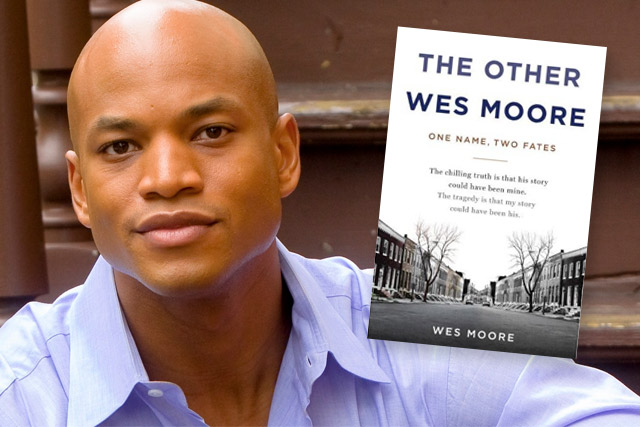
• The Other Wes Moore, by Wes Moore. "Two kids with the same name lived in the same decaying city. One went on to be a Rhodes Scholar, decorated combat veteran, White House Fellow, and business leader. The other is serving a life sentence in prison. Here is the story of two boys and the journey of a generation." (From Goodreads.) Both Wes Moores are black. This memoir examines the turns of a dime on which fate can rest. Whether your life ends up in success or failure depends on so much outside your control ... it especially depends on what happens to you when you're little, before you can possibly be held responsible for anything. Bad choices are made, certainly, and good character is rewarded, but there's so much more to this story—and to any story—than the usual "bootstraps" myth we are fed.
• The Color of Water, by James McBride. OK, I haven't actually read this yet, but it has been recommended to me so many times I'm moving it to the top of my TBR. This is also a memoir, written as a "black man's tribute to his white mother." I've read other things by McBride, and know his writing is excellent.
Reading one story helps a little, but each story we read about people we've labeled "the other" erases the line between us and them. The more stories we read, the more we build compassion and community. Hate and fear, apathy and blame, can only exist in a context of ignorance. Let's talk less, listen more, and learn.

